
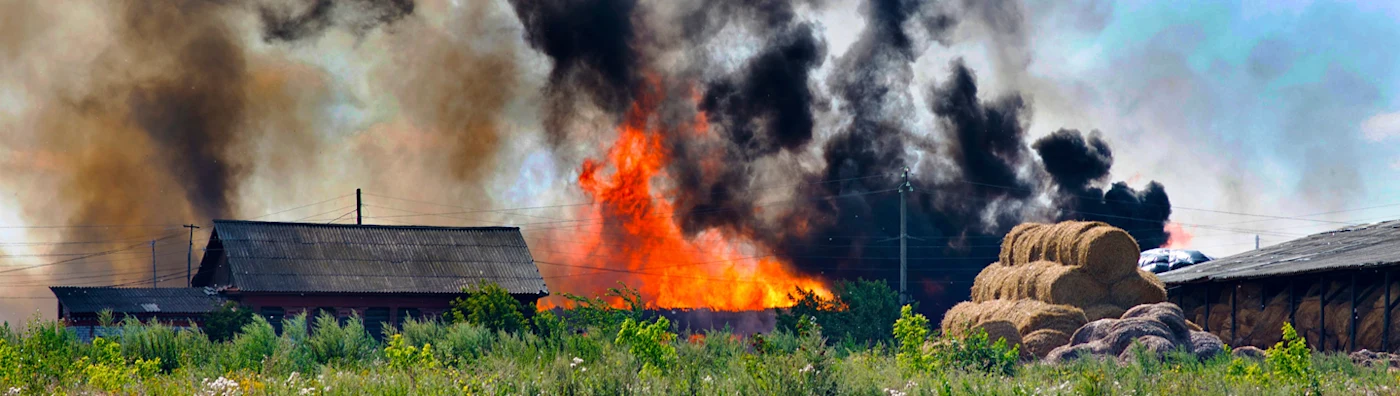
In April 2023, a devastating fire tore through the barn of a rural dairy farm in the Texas Panhandle. The inferno resulted in one injury, destruction of the barn and contents, loss of revenue, and death and disposal of over 18,000 heads of cattle. The valuation of the loss in livestock alone is estimated to be over $35 million.
The investigation into the cause of the blaze revealed an electrical malfunction in the engine of the dairy barn's manure vacuum. According to the Animal Welfare Institute, over half of all barn fires are either suspected or known to have been caused by heating lamps or faulty electrical components.
In addition to machinery and electrical hazards, the main causes of fires on the farm also include improper storage of flammable and combustible materials and lightning. To help mitigate these risks, farm operators should keep the following safety considerations in mind to help keep their barns and other farm structures fire-free.
Reduce the Chance of Fires Caused by Farm Machinery
From large grain dryers to small heat lamps, machinery and other equipment are essential to a farm, but they can also be the source of devastating fires. Mitigation strategies for the fire dangers posed by farm machinery include the following:
Follow the manufacturer's recommended servicing schedule
Keep machinery lubricated to minimize friction
Remove excess dirt, oil, grease, or other build-up
Maintain exhaust systems to prevent sparking and tune engines to avoid backfiring
Routinely check for fuel leaks and remove from service immediately if one is detected
Refuel and repair fuel tanks away from barns or other farm structures and any sources of ignition
Power switches should be clearly marked and easily accessible in the event of an emergency
Cool down equipment and check for hot areas
Secured heat lamps away from combustibles. They should be suspended by a non-combustible such as a chain
Unplug appliances when not being used, and repair or replace any appliances with visible damages, such as frayed or spliced cords and missing prongs
Properly maintained fire extinguishers should be located in designated areas, including on mobile equipment such as tractors, combines, and trucks
Preventing Electrical Fires in Farm Structures
Maintaining the electrical system of a building on a farm can be daunting. Weather and wet environments can inadvertently impact the condition of electrical components. Damage can occur when rodents chew on electrical wiring. Heating units or fan motors that are faulty, damaged, or dirty can lead to electrical shorts. Best practices to keep electrical systems safe include:
Housekeeping: Proper housekeeping is essential. Keep all electrical components, such as heaters, fans, and light fixtures free of debris, dust, and cobwebs.
Electrical Panels: Electrical panels should be installed in a clean and dry area, be free of damaged or exposed wires, and have no open switch spaces. Keep combustibles at least 3 feet away from all sides of electrical panels. If installed in high vehicle or forklift traffic areas, provide a bollard post or other guard system to protect electrical panels from accidental collisions.
Maintain Wiring and Overall Electrical System: Electrical wiring should be installed in a protective conduit to avoid damage. Conduct routine inspections of electrical systems and wiring. Conditions such as dim or flickering lights, deteriorated or damaged wiring, seized fan motors, and frequently tripped fuses or circuits should be immediately inspected and repaired by a licensed, qualified electrician. Consider regular thermography evaluations to identify electrical system hot spots. Develop, implement, and maintain an Electrical Maintenance Program.
Incandescent vs LED Bulbs: Broken light bulbs can lead to sparks. Whenever possible, use LED bulbs instead of incandescent bulbs. Light bulbs should be protected from animals and other sources of damage.
Extension Cords: Minimize the use of extension cords by installing permanent wiring. If used, they should be rated for outdoor use and only temporarily. They should not be passed through walls or ceilings as it increases the likelihood of being damaged. Never repair and always replace damaged cords. An inspection of all extension cords should be routinely conducted.
Managing Flammable & Combustible Hazards
Fires need fuel, and farms have no shortage of flammable or combustible materials. From the presence of dirt, grain dust, and cobwebs to the storage of hay, bedding, pesticides, and fertilizers, the following tips can help farm operators manage this hazard:
Materials should not be stored inside the barn and should not be stored in large quantities, keep only what is needed
Keep materials away from machinery, electrical components, and sources of heat
Mark all flammable liquids and store them in appropriate containers away from ignition sources, and supplied with proper ventilation. Never store fuel in a barn
Immediately clean up spills of flammable liquids and discard oily rags in covered metal containers
It is best to keep fertilizers in non-combustible buildings or as far away from combustible
materials as possible
Pesticides must be stored in separate buildings with posted warning signs
Compressed gas cylinders should be securely stored upright, outdoors, and away from heat sources
Enforce a strict "no smoking" policy inside buildings and other areas where flammable and combustible materials are stored
Hay should be dry before storing. Monitor hay temperature, and if over 150 degrees F, continue monitoring. If the hay temp reaches 175 degrees F, contact the fire department to assist with the removal
Keep weeds, grass, and other vegetation manicured or cut away from structures and buildings
Protection from Lightning-caused Farm Fires
According to the National Fire Protection Association (NFPA), fire departments responded to an estimated 22,600 structure fires caused by lightning between 2007 and 2011. More recently, lightning has caused fires on farms in both Minnesota and Georgia. While it may seem impossible to prevent fires caused by lightning, the Equine Science Center at Rutgers highlights measures farm operators can take to protect their buildings:
Primary farm buildings should be equipped with professionally installed and grounded lightning rods made of copper or aluminum
All pipes, water systems, electrical systems, and telephone lines should also be grounded
A professional company should be used to provide proper installation and maintenance
More information on proper lightning precautions can be found at the Lightning Protection Institute
Preparing for the Fire
Fires do happen, and if they do, farms present a serious firefighting challenge due to the typical rural location. There could be a lack of water supply, or the response time may take longer due to travel distance. Farms typically are surrounded by open fields with little barrier from the wind, which adds to the fire spread. Farms can also be difficult to access due to poor road conditions. However, having a plan of action in the event of a fire can help mitigate the severity of the blaze.
Invite the fire department every few years to review the farm for fire access, water sources, and layout of the property to create a plan of action
Provide properly mounted and maintained ABC fire extinguishers in all buildings
Train employees on the use of fire extinguishers
Practice fire drills and employee response and ask the fire department to participate in a mock fire response drill
Maintain a clear path to buildings for fire truck access
A preventative approach can save the farm from a devastating loss of property, livestock, and income. In addition, having the proper insurance coverage in place in the event of a fire can help an insured sleep better at night. PHLY's Commercial Agribusiness and Farmowners programs are designed to protect what matters most should a devastating fire occur.
Additional Resources and References:
NASD - Agricultural Fire Safety (nasdonline.org)
Fire Prevention and Safety Measures Around the Farm | Equine Science Center (rutgers.edu)