
Harvest isn't just the culmination of a year's hard work. It's the time to celebrate a job well done and to prepare and plan for your next growing season. But it's also when farmers can encounter more farm safety risks than usual. Being aware and prepared can help lessen the risks of your harvest season.
The 3 Harvest Farm Safety Risks That Top the List
The first risk that gets a lot of attention around harvest time involves grain bins.
Grain Bin Safety
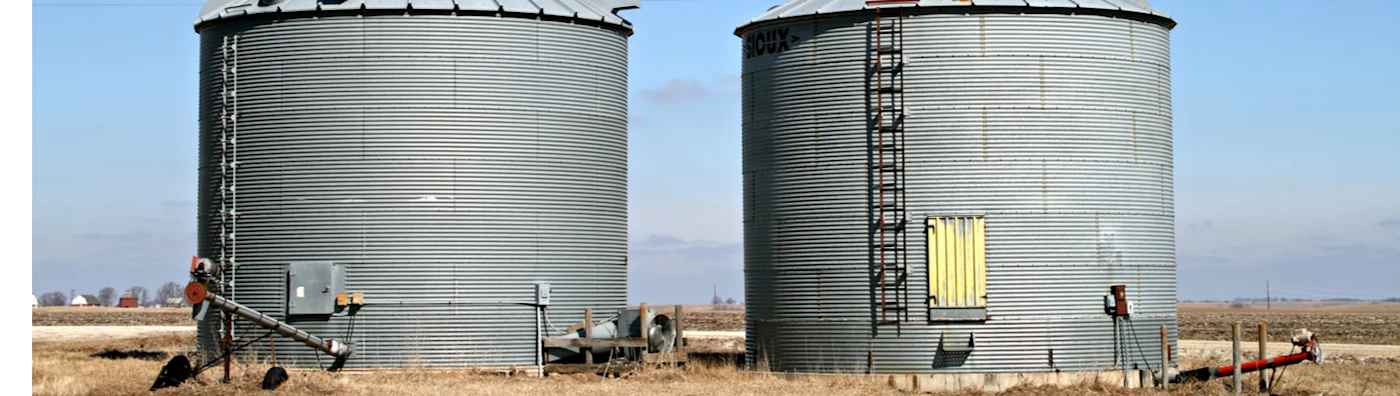
Grain bin safety is a concern for good reason. Wet harvests in recent years have increased the number of grain entrapments and deaths as workers go into the bins to check out grain quality or fix plugged augers. They walk on moving grain or attempt to clear grain built up on the inside of a bin. They may break through the surface crust and plunge below, becoming engulfed by the grain in less than 20 seconds, after which suffocation can quickly occur.
Following these safety tips can help limit risk when working around grain bins:
Use logout/tagout on the grain's auger power source so that the machinery isn't accidentally turned one while a worker is in the silo
Check air quality to ensure there is enough oxygen present and wear a mask
At a minimum, make sure there are three people present and close enough to hear a cry for help
Never enter the bin without wearing a safety harness secured to an adequate anchorage point (not the roof or a ladder) able to withstand the weight you're pulling against. Note that just one foot of grain in a bin can create about 300 pounds of pressure to pull against to lift someone out. It will probably take two people to pull someone out
If you become trapped in a bin and can walk, try to stay near the outside wall. Cup your hands over your mouth and take short breaths
Do not go into the grain yourself to rescue someone. Call for help immediately
Vehicle Safety
Next, ATVs (all-terrain vehicles), tractors, combines, and other slow-moving vehicles are a second major source of accident hazards at harvest time because of their increased usage. In fact, a recent study showed the fatality rate for roadway vehicle crashes was nearly five times as great for agriculture versus non-agriculture crashes. The following precautions can help limit risk and improper use.
When using ATVs:
Wear appropriate gear such as an ATV-appropriate helmet, goggles, thick and tight-fitted clothing that isn't baggy enough to get caught in the ATV or on environmental objects, gloves, and sturdy footwear with laces securely tied
Equip your ATV with visibility flags and lights
Control speed based on the landscape and visibility and keep a careful eye out for hidden hazards
Come to a complete stop before crossing roads and make sure only to cross where visibility is good in both directions
When using combines or tractors:
Follow a one-seat/one rider rule unless there is an additional seat
Do not get on or off the machine while moving or in use
Keep mirrors clean and adjusted
Take extra care when reversing, be careful on slopes, and park on flat ground when possible
Allow the engine to run down before approaching the back of a combine
Be patient when working in difficult crop conditions
Do not attempt to reach into the header with an arm or leg or attempt to clear a blockage until it is turned off and ensure you are following the manufacturer's instructions
Any machinery moving under 25 miles an hour should display a slow-moving vehicle emblem
Stay in the lane and do not drive equipment half on the shoulder and half on the road
Give ample warning when making a left-hand turn
Fire Safety
For our third tip, the harvest season is also a time where there is a greater chance of a fire happening both accidentally and on purpose around the farm. Being aware of potential hazards can help diminish the risk of fire injury and damage.
Be careful of any open flames or equipment that sparks when around grain bins (such as a cutting torch or an abrasive saw). This can cause a fire or an explosion from dust and fumigant residue inside the bin
Take preventative measures to avoid combine and tractor engine fires, which cause $20 million in property losses each year
Use a pressure washer to clean all parts at the start of the season, and use a leaf blower to remove dirt and debris daily
Inspect starter motors and heating/cooling systems, and replace any frayed wires
Keep UL-approved fire extinguishers on board
Bring a shovel to tamp down any small fires that occur
Carefully monitor and properly extinguish open burn pits and recreational fire pits
Don't burn when conditions are very dry or windy
Manure piles should be at least 20 feet away from any building to decrease the chance of catching on fire if the pile reaches a high enough temperature to combust spontaneously
Don't put heaters near livestock where they can be kicked over or near combustible items such as hay
Install smoke detectors in all buildings around the property
When It Comes to Farm Safety, PHLY is There for You During Harvest and Every Season
Philadelphia Insurance Companies (PHLY) has been protecting farmowners and agribusinesses with comprehensive coverage and risk management services for the exposures you face, including wind, hail, fire, flood, or any equipment/building damage, with:
General liability: Protects against liability claims for property damage or bodily injury happening on the premises or caused by operations or products. PHLY has limits of $1M for each occurrence/$2M aggregate
Farmowners insurance offers additional farm liability with limits of $1M for each occurrence/$2M aggregate and includes a deluxe endorsement at no charge
Commercial agribusiness insurance offers employee benefits liability
Property: Provides financial reimbursement in the case of property damage, theft, and injury of someone other than the owner or renter. PHLY offers business income, vandalism reward reimbursement, replacement costs, boiler or mechanical breakdown, and elite property enhancements
Auto: Provides coverage for owned/non-owned and hired autos for liability and physical damage. It can also include rental reimbursement
Plus, PHLY offers:
$10M Umbrella liability: While other carriers may have decreased their umbrella liability limits - the coverage in excess of the customer's regular liability limits - PHLY has limits of up to $10M
Crop insurance: With crop losses in the tens of billions due to weather and fire, one critical insurance plan that may be missing from other carriers is crop insurance. PHLY is pleased to make this vital insurance available through its sister company, Tokio Marine HCC. With over half a billion in crop insurance coverage in force, TMHCC is a valuable part of the benefits of working with PHLY
PHLYTRAC: This program is available through PHLY's extensive risk management team and offers GPS monitoring and training to lower the costs and potential for driver-related accidents. This no-cost benefit available to insureds is especially significant when you consider that auto accidents are actually the top agribusiness claim
Get More With The PHLY Difference
Stay safe this harvest season and beyond with these tips. Learn more about PHLY's agriculture insurance solutions for commercial agribusinesses and farmowners by downloading our free eBook, Helping Your Clients Navigate Agribusiness Insurance, visiting our product pages, or contacting your PHLY representative today.