
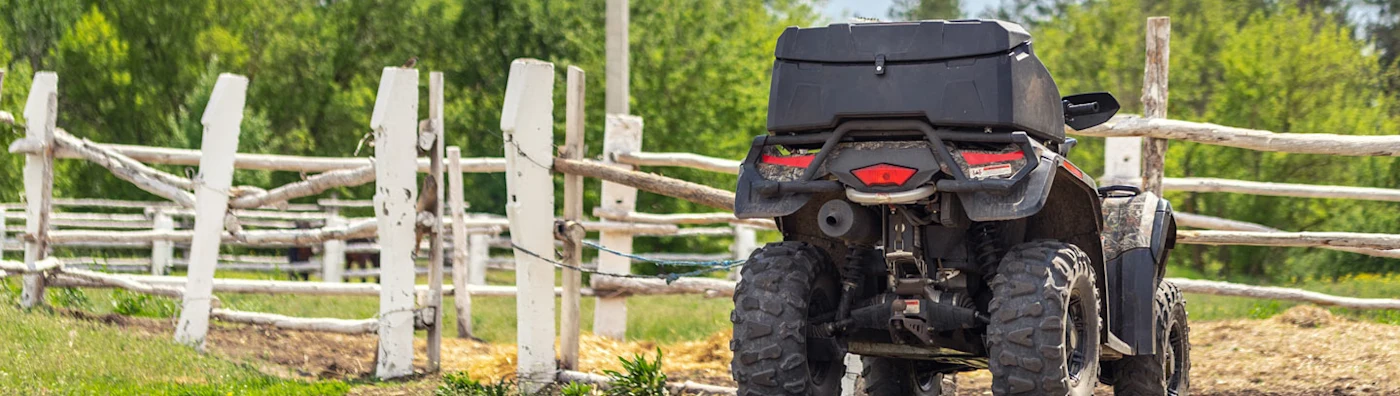
When someone pictures the day-to-day operations of a farm, the image may include massive pieces of machinery moving dirt, herding livestock, or hauling crops. But the use of one small off-highway vehicle (OHV) in agribusiness has grown tremendously over the years, from a recreational vehicle driven for fun to a versatile workhorse driven to manage numerous aspects of the farm - the all-terrain vehicle (ATV). Like any other piece of farm equipment, ATVs can be dangerous, and even deadly, if used improperly. The following information will help protect farm owners, their employees, and their property whether using an ATV for thrills or tills.
Different Types of OHVs
Though ATVs are probably the most common, there are a few OHVs that are used in the same capacity but are slightly different in design. It's important to choose the right type of vehicle for the job you want it to perform, just like choosing any other tool.
ATVs: All-terrain vehicles are identified by the straddle seat for the operator (some may accommodate one additional passenger), handlebar steering controls, and four low-pressure tires. While three-wheel varieties exist on the used market, the manufacture of three-wheel ATVs has been banned since 1988 due to higher incidents of injury and death. Only four-wheel ATVs should be considered.
ROVs: Recreational off-highway vehicles are a newer type of OHV, designed to operate on the same type of terrain as ATVs. They also have four, low-pressure tires but have a more robust design, including automotive-type steering controls, bench or bucket seating for two or more occupants, rollover protective structures (ROPS), occupant restraints, and have a maximum speed greater than 30 mph.
UTVs: Utility task vehicles are very similar in design to ROVs but have a maximum speed of 30 mph or less. If you find the vehicle needs to accommodate multiple passengers, consider an ROV or UTV instead of an ATV.
Protecting Operators and Riders
These pieces of equipment provide a valuable tool for farm management, but also present dangers to operators and riders, such as hot engine parts and ease of rollover. The misuse of ATVs has resulted in tens of thousands of injuries and hundreds of deaths each year. Head injuries are the most common injuries suffered in ATV accidents, but others include bone fractures, spinal cord, leg, and internal injuries. The Consumer Product Safety Commission (CPSC) reports that a quarter of those injuries are sustained by children under the age of 16, the highest of any age group.
The ATV Safety Institute's "Golden Rules" summarizes some of the most important precautions to consider when operating or riding ATVs, including:
Wear Department of Transportation (DOT)-compliant protective gear, including helmet, goggles, long sleeves, long pants, over-the-ankle boots, and gloves
ATVs are off-highway vehicles. Never ride on paved roads except to cross when permitted by law and done safely
Never ride under the influence of alcohol or drugs
Never carry a passenger on a single-rider ATV, and no more than one passenger on an ATV specifically designed for two people
Ride an ATV that's right for your age
Supervise riders younger than 16
Consider taking hands-on ATV operator training
OHV rollover accidents can lead to devastating injuries, particularly involving ATVs since they do not have the same protection as ROVs and UTVs. Proper load management is extremely important in keeping the vehicle from tipping and rolling over, especially when operating on rough terrain. When loading or towing with any OHV, follow the manufacturer's recommendations regarding weight. The load should also be secured, properly hitched, or positioned so the driver has a clear view of what is in front of and behind the vehicle.
Protecting the Investment
ATVs and other OHVs can be large-ticket items. To protect these investments, the following should be considered:
Secure the vehicles in a shed or other building when not in use
Store away from structures housing livestock
Remove keys and store them in a secure location
Complete regular maintenance per manufacturer's recommendations
Properly store fuel in approved containers
Consider using asset trackers that use GPS to monitor location
Complete a pre/post use checklist that includes checking: tires, throttle, brakes, lights, fuel and oil levels/leaks, drive-train and chassis
Additional Resources
PHLYTRAC: Philadelphia Insurance Companies (PHLY) provides a no-cost GPS solution for insureds with auto coverage. PHLYTRAC members have access to additional add-ons at discounted pricing, including asset trackers that use the same software and GPS network to monitor the location of equipment fitted with the devices.
Consumer Product Safety Commission: The CPSC website provides state-specific information regarding licensing and other requirements for ATVs.
ATV Safety Institute (ASI): ASI provides various resources and riding tips, including a Before You Ride checklist.
National Ag Safety Database (NASD): The NASD website provides a number of safety articles and reports, including ATV Safety for Farm Work, Recreation and Safe Use of ATVs in Agriculture.
Learn more about The PHLY Difference when it comes to Farmowners or Agribusiness insurance:
Insurance for Commercial Agribusinesses
What Does Farmowners Insurance Cover?